
From the first cry to the years of adolescence, nutrition plays a determining role in your child’s growth and development. Like every small thing, you also look for the best paediatrician for your child who can provide exceptional care and guidance. If you are in search of an experienced child dietician in Siliguri, you can consult Dr. Sumita Mishra, known for her efficient and versatile child care. Proper nutrition from an early age not only contributes to your physical growth but also supports your emotional and brain development.
A child dietician helps ensure proper growth, strong immunity, and overall well-being during childhood. By understanding the signs that your child requires a visit to a paediatrician care you can make sure your child's health is addressed on time. In Siliguri, Dr. Mishra offers a wide range of pediatric nutrition and growth services, assuring your child’s long-term health. Parents in Siliguri and nearby areas like Matigara, Bagdogra, and Jalpaiguri can consult Dr. Sumita Mishra for expert pediatric nutrition guidance.
Know Who is A Child Dietician
A child dietician is an expert who has specialised experience in the nutritional requirements of infants, children, and adolescents throughout childhood and adolescence. They monitor your child’s health and recommend the necessary nutrients to support their healthy growth and manage medical conditions. Whether you are a new parent and unable to understand the nutrition required for your newborn, or are having trouble with feeding techniques, a paediatrician offers crucial guidance.
They provide customised meal plans, address chronic health conditions of your child, and track their cognitive and physical growth in light of nutrition. A child dietician addresses a child’s weight and height and collaborates with parents to ensure proper nutrition. Their role in determining overall growth and nutrition for your child is remarkable.
Signs Your Child May Need a Diet Consultation
Below are the signs in your child that may require a consultation with a paediatrician:
Growth and Physical Symptoms
When your child fails to follow the growth chart, such as weight and height, it may indicate insufficient calories, protein, or key micronutrients. Beware of these physical signs:
- Slowdown of the growth chart over weeks
- Lowered weight and height or sudden shifts in BMI
- Frequent infections and slow wound healing
- Hair thinning, dry skin, brittle hair, and easy bruising
Feeding Patterns and Intake Level

When your child is reluctant to eat persistently, depends on bottle feeding, and refuses age-appropriate food textures with limited variation, your child might need a diet consultation. You can consider a pediatric consultation in Siliguri if you notice these signs:
- Limited food selections with fewer than three regular food groups
- Reluctance in eating expected texture as per age
- Recurrent vomiting, signs of reflux, or visible aversion at meals
Loss of appetite lasting more than 2 weeks without visible illness
Behavioural, Developmental and Mental Indicators
You must know that nutrition affects your child’s mood, learning, and significant behavioural changes. Watch for these signs:
- Noticeable fatigue and decreased concentration in school
- Slowing in language and play, and loss of previous skills
- Mood changes and irritation during meal time with energy dips
Sleep quality, energy levels, and digestive signals

Constant gastrointestinal symptoms, poor sleep, and low energy indicate food intolerance, infection, and underlying conditions. Note the signs:
- Recurrent constipation or diarrhoea
- Frequently waking up at night is related
- Feeling tired instantly during routine play or low activities
Micronutrient Deficiency Markers
Certain deficiencies are present with specific physical and behavioural clues. Consider these signs:
- Breathing difficulties, exertion, pale skin, and pica can be signs of iron deficiency
- Developmental delays, bowed legs or wrists, or constant muscle pain can be a sign of vitamin D deficiency
- Neurological changes, numbness, or sensory changes can be signs of B12 deficiency or folate issues
Pediatric Nutrition & Growth Services Offered
Here are the services related to a child’s nutrition and growth that are offered by a child dietician:
Growth monitoring & BMI
Growth monitoring in children includes checking height and weight regularly to detect growth issues early. Dieticians check a child’s BMI (Body Mass Index), a measure of weight relative to height, to identify nutritional issues, growth faltering, and potential obesity to ensure healthy development.
Diet plans for underweight children
Malnutrition is one of the major concerns among children, which creates difficulty in maintaining a healthy weight. A child nutritionist tracks the health of underweight children and provides a diet plan containing required nutrition-rich, high-calorie foods to support their weight. Their diet chart can include frequent meals, adding healthy fats like butter and olive oil to meals, whole milk, yogurt, and snacks like nuts, bananas, and smoothies.
Weight Management
A child’s weight is a crucial indicator of health conditions and development. A pediatric dietician ensures a child’s effective weight management, focusing on healthy lifestyle habits including a balanced and healthy diet, physical activities, and an established meal and snacking time. Their key strategy includes limiting sugary drinks and processed foods, and reducing screen time for a healthy routine for a child.
Nutrition for Allergies & Asthma
Sometimes kids are prone to certain allergens in foods like peanuts, and lactose intolerance. A child dietician offers healthy replacement of food options, ensuring sufficient intake of vitamins. Also, a nutrient-dense diet containing antioxidants like vitamin C, E, A, and omega-3 fatty acids, and fibre that help reduce inflammation in children suffering from asthma.
Chronic Illness Nutrition Support
Children suffering from chronic illnesses like liver disease, cystic fibrosis, celiac disease, and cancer are provided with tailored diet plans. Key methods include specialised monitoring for metabolic or kidney issues and dietitian supervision to provide standard nutrition and manage deficiencies.
Adolescent Nutrition
With approaching adolescence, a child requires increased intake of calories, protein, iron, calcium, and vitamin D that strengthen their growth, pubertal development, and bone mass density. Their diet is modified and includes fruits, vegetables, and lean protein essential to avoid deficiencies, maintain a healthy weight, and prevent long-term disease.
Why Choose Dr. Sumita Mishra as Your Child's Dietitian in Siliguri?
Dr. Sumita Mishra is one of the most efficient Consultant Paediatrician and Pediatric Intensive Care Specialist in Siliguri, whom you can consult for your child’s nutrition. She is also a trusted pediatric nutrition specialist in Siliguri, known for providing comprehensive child healthcare and nutrition guidance. With extensive knowledge and expertise, she effectively manages complex pediatric conditions and offers holistic care solutions for children. There are several reasons you should consult Dr. Mishra, such as :
- She has completed her MBBS from Utkal University, Orissa, completed honours in Forensic Medicine and Surgery, and received a Gold Medal in Surgery
- She has earned DNB in Pediatrics from Jawaharlal Nehru Hospital and Research Centre, Bhilai
- She is certified in Pediatric Critical Care Medicine(IDPCCM) from Kalinga Institute of Medical Science, Bhubaneswar
- Dr. Mishra has conducted many crucial studies that include the clinical profile of dengue and the correlation between NAFLD and BMI
- She has an active membership in Pediatric Advanced Life Support(PALS) and Basic Life Support (BLS) training
- She has remarkable experience in treating more than 1000 children successfully
- She provides a patient-centred and compassionate approach to treating severe medical conditions in children
Role of a Balanced Diet for Children
As a parent, you must be aware of the role a balanced diet plays in your child’s health and development. A balanced diet rich in fruits, vegetables, essential nutrients, and fibres supports your child's optimal growth, cognitive development, and energy. You need to make sure it comprises foods from different groups, ensuring your child receives the right combination of vitamins, proteins, minerals, carbohydrates, and healthy fats. Some of the major benefits of a balanced and healthy diet include:
- Provides steady energy for playing and learning
- Supports their ability to focus and concentrate
- Strengthens the immune system to fight illness and infections
- Helps develop strong and healthy teeth and gums
- Helps reach and maintain a healthy body weight
- Supports brain development and improves memory
- Reduces the risks of chronic disease both in the present and later life
- Supports overall physical and mental well-being
Foods Important for Child Growth
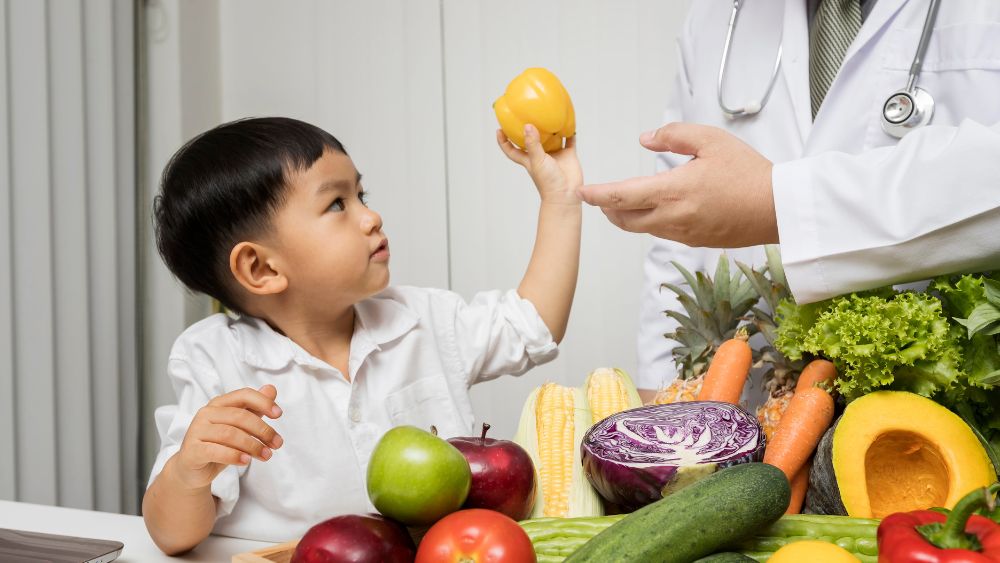
Providing the right foods during childhood helps support healthy growth, brain development, and strong immunity. A balanced diet should include foods from different groups to ensure children receive essential nutrients for their overall development.
Some important foods that support healthy child growth include:
Protein-rich foods
Eggs, fish, chicken, lentils, beans, paneer, and milk help build muscles and support tissue growth.
Calcium-rich foods
Milk, yogurt, cheese, almonds, and leafy green vegetables help strengthen bones and teeth.
Iron-rich foods
Spinach, lentils, beans, red meat, jaggery, and fortified cereals help prevent anemia and support brain development.
Fruits and vegetables
Apples, bananas, oranges, carrots, broccoli, and tomatoes provide essential vitamins, minerals, and antioxidants that strengthen immunity.
Whole grains
Brown rice, whole wheat, oats, and millets provide energy and fibre that support digestion and sustained activity.
Healthy fats
Nuts, seeds, avocados, olive oil, and fatty fish support brain development and overall growth.
Including a variety of these foods in your child’s daily meals can help ensure proper nutrition and healthy development throughout childhood.
Also Read:-
How to Increase Immunity in a Child Naturally in India
The Importance of Preventive Care in Children
Common Childhood Illnesses & Treatments
How a Pediatric Consultation Works?
A pediatric consultation comprises a comprehensive health evaluation for children, focusing on physical exams, developmental screenings, and addressing parental concerns. From infancy to adolescence, a paediatrician diagnoses, treats, and prevents health issues in children. These consultations may include :
- Routine check-ups for general health monitoring and vaccinations
- Tracking developmental milestones such as speech, mobility, and motor skills
- Head-to-toe assessment
- Identifying illness symptoms such as fever, allergies, infections, or digestive issues
- Reviewing medical history and medications
- Addressing parents' concerns and queries
- Creating personalised treatment plans or a diet chart
- Scheduling follow-up visits
FAQs
1) How do I know if my child is growing properly?
A: Keep a growth chart at home and track their height and weight. Also, go for regular check-ups with a pediatrician to track your child's development.
2) How can I deal with picky eating in my child?
A: Try offering a variety of foods, maintaining regular meal times, and encouraging them to try new foods to help manage healthy eating habits.
3) When should I consult a child dietician for my child?
A: You should consult a pediatric dietician if there are concerns about appetite, developmental delays, weight changes, cognitive changes, and eating habits in your child.
Conclusion,
By understanding the importance of nutrition for your child from an early age, you can contribute to your child’s optimal growth and development. Therefore, it is essential to find a proficient pediatric dietician for your child who has remarkable experience and in-depth knowledge in child care. You can consult the best child specialist in Siliguri to determine your child's physical, mental, and emotional well-being in the long run.

 09-03-2026


